TL;DR (Too Long; Didn’t Read)
- Denier (D) vs. Waterproofing: Denier measures Fabric Thickness and Abrasion Resistance (higher D = tougher, heavier). Denier protects the waterproof layer but is not the waterproof rating (Hydrostatic Head, measured in mm).
- Membranes vs. Coatings: High-end Membranes (ePTFE/GORE-TEX) use microscopic pores for superior, fast breathability. Budget-friendly Coatings (Polyurethane/PU) use slower chemical diffusion and are prone to eventual failure via hydrolysis (breakdown from moisture/heat).
- Construction Types: 3-Layer (3L) is the most durable system, sandwiching the membrane between the face fabric and a bonded liner (standard for hardshells). 2.5-Layer (2.5L) is the lightest and most packable, using a protective internal print instead of a full liner.
- Integrity is Key: Even the best materials fail if the seams leak; always choose gear with fully taped seams. Regular cleaning is essential to prevent body oils from clogging membrane pores and compromising breathability.
Table of Contents
- Decoding Denier: Fabric Thickness and Durability
- The Core Conflict: Waterproofing vs. Breathable Fabric Technology
- Understanding Construction Types: 2-Layer, 2.5-Layer, and 3-Layer
- Deconstructing Durability: Denier and Abrasion Resistance in Outerwear Fabric
- The Core Barrier: Waterproof Fabric Technology and Membranes
- Analyzing Coating Chemistry and Performance
- Hydrostatic Head: Rating Waterproof Fabric Technology
- The Role of Construction Types
- Outerwear Construction Guide: Layers and Laminates
- The Integrity of Waterproof Breathable Clothing: Seam Taping and Maintenance
- Frequently Asked Questions
- What is the ideal Denier for a backpacking shell?
- PU Coating vs. ePTFE Membrane Technology: A Technical Breakdown
- PU and TPU Coatings: Understanding the Breathability Trade-Off
- Denier vs. Durability: Is a Higher Denier Always Better for Outerwear Fabric?
- The Next Generation: Future of Waterproof Breathable Clothing Technology
Welcome to the deep dive, one gearhead to another. When you invest in a premium ski jacket, a technical snowboard jacket, or high-performance hiking shell, you aren’t just buying fabric. You are purchasing a highly engineered system of Denier counts, complex coatings, and advanced membrane technology.
This Outerwear Construction Guide is designed to peel back the layers, literally, on the materials that keep you dry. We’re going beyond marketing jargon to analyze the science behind true Waterproof Breathable Clothing.
Understanding the interplay between fabric thickness (Denier) and the waterproofing method (Coatings versus Membranes) is crucial for selecting durable gear. After all, what good is a Hardshell versus Softshell comparison if you don’t know the fundamental differences between Polyurethane (PU) and Polytetrafluoroethylene (PTFE) based systems?
Whether you are selecting gear for Action Sports or simply seeking reliable Techwear, the details matter. Let’s start with the basics of Fabric Durability.
Contents
Decoding Denier: Fabric Thickness and Durability

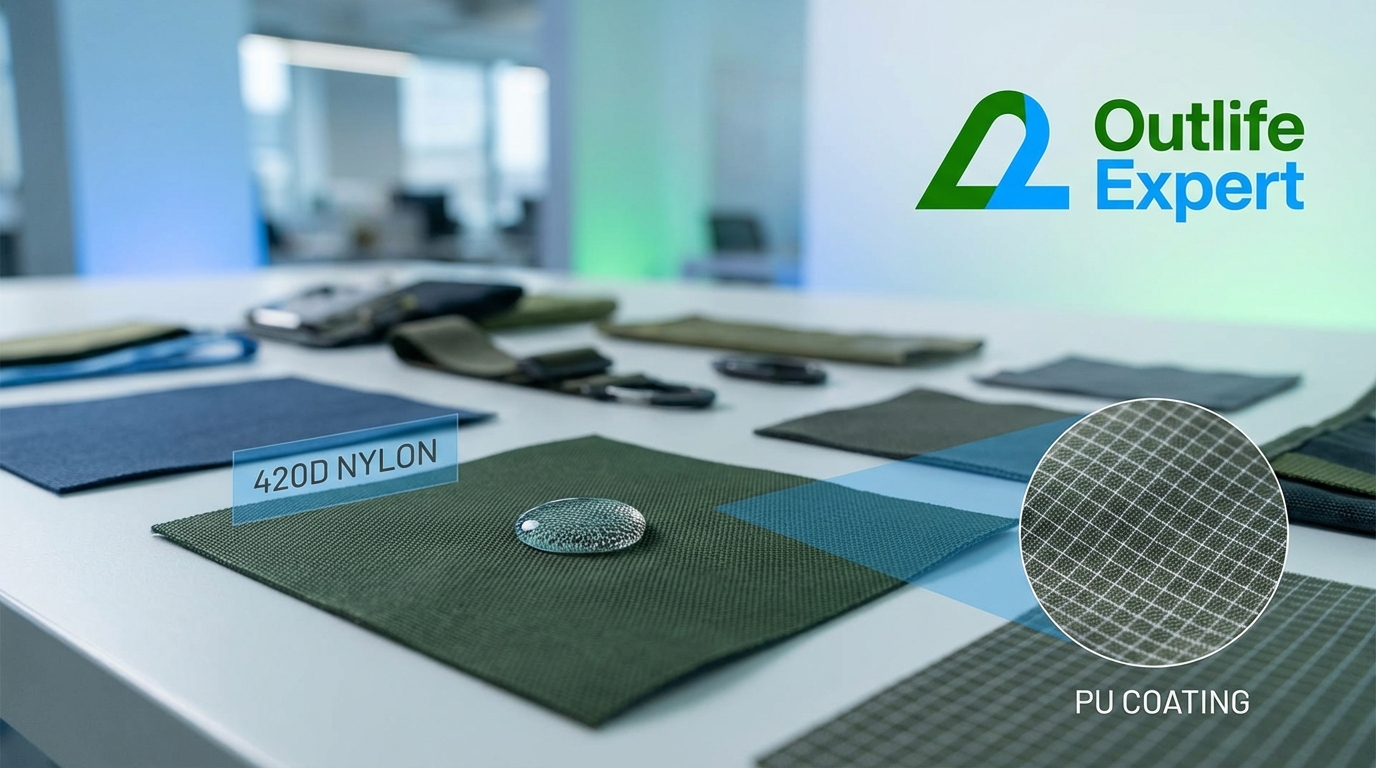
Denier (D) is often the first number you see when discussing Outerwear Fabric durability. It’s a simple metric, yet fundamental to understanding Fabric Thickness and overall resilience.
Technically, Denier measures the mass in grams of 9,000 meters of a single filament thread. In practical terms for your gear: a higher Denier means a thicker, heavier, and generally more resistant yarn.
For example, a 40D fabric (common in lightweight shells like GORE-TEX PacLite) is much lighter and less durable than a rugged 500D fabric used in backpacking packs or extreme duty ski jacket panels.
For serious Action Sports, especially mountaineering or aggressive use, Fabric Durability is paramount. You want higher Denier counts (70D to 150D) strategically placed in high-wear areas like shoulders, elbows, and cuffs.
The Core Conflict: Waterproofing vs. Breathable Fabric Technology

The true magic of modern gear lies in balancing two opposing forces: keeping external water out while allowing internal moisture (sweat vapor) to escape. This is the perpetual challenge driving all modern Waterproof Fabric Technology.
Historically, waterproof gear was rubberized and non-breathable. Today, we rely on sophisticated Membrane Technology, which revolutionized outerwear starting in the 1970s.
These membranes are primarily categorized into two main groups: porous (like expanded Polytetrafluoroethylene, or ePTFE) and non-porous (often Polyurethane (PU) or polyester compounds).
Brands like The North Face, Helly Hansen (with Helly Tech®), and Mountain Hardwear rely heavily on these technologies, often sourcing specialized materials from innovators like Toray in Japan.
PTFE Membranes: The GORE-TEX Standard
The gold standard in this field remains GORE-TEX Fabrics, pioneered by W.L. Gore Corporation. Their success is built on expanded Polytetrafluoroethylene (ePTFE) Membrane Technology.
This PTFE membrane features billions of microscopic pores, small enough to block liquid water droplets, yet large enough to allow water vapor (sweat) to pass through. This principle defines what we expect from high-end Waterproof Breathable Clothing.
Other companies utilizing similar Polytetrafluoroethylene structures, or derivatives like expanded Polyethylene (ePE), include eVent™ and certain offerings from Sympatex™.
PU and PE Membranes: Coatings and Non-Porous Systems
Alternatively, many manufacturers use Polyurethane (PU) coatings or non-porous membranes. These systems achieve waterproofing differently.
Instead of relying on microscopic holes, Polyurethane (PU) coatings or membranes move moisture through a chemical process called diffusion. The moisture is absorbed on the inside and pushed through the material to the drier outside air.
While often less expensive, modern non-porous membranes, such as those found in some Entrant® or Dermizax™ systems, can offer excellent performance and durability, often rivaling the breathability of porous systems.
The application of these technologies determines the Construction Types of your gear, which is the next critical step in understanding your shell midlayers.
Understanding Construction Types: 2-Layer, 2.5-Layer, and 3-Layer

When shopping for a Ski Jacket or Snowboard Jacket, you will encounter 2 Layer Construction, 2.5 Layer Construction, and 3 Layer Construction. These terms define how the face fabric, the waterproof membrane, and the inner liner are bonded together.
The choice between these Construction Types dictates the gear’s weight, packability, feel, and ultimately, its Fabric Durability and intended use.
Crucial to all types is Seam Taping. Even the best Waterproof Fabric Technology will fail if the seams, where the fabric pieces are stitched together, are not fully sealed.
A true Hardshell requires fully taped seams to achieve reliable weather protection, ensuring no water penetrates through the needle holes.
Related Video
2L vs. 3L Outerwear Explained
Deconstructing Durability: Denier and Abrasion Resistance in Outerwear Fabric

When analyzing high-performance technical gear, whether it’s a rugged backpack or a lightweight backpacking shelter, two factors fundamentally dictate longevity and water resistance: the fabric’s Denier (D) rating and the applied chemical coating or advanced membrane.
These specifications form the cornerstone of any effective Outerwear Construction Guide.
In short, Denier tells you how tough and tear-resistant the shell fabric is, and the coating dictates how truly waterproof the system remains over time.
One gearhead to another, let us dive into the science behind these critical components of Techwear.
Understanding the Denier Measurement
Denier is a highly specific unit of linear mass density, defined as the mass in grams of 9,000 meters of fiber.
This technical measurement is what produces the familiar ratings you see on specs: 20D, 70D, or 500D.
A higher denier rating means a thicker, heavier individual yarn was used in the weaving of the Outerwear Fabric.
This directly correlates to increased Fabric Thickness and, generally, superior abrasion resistance.
For reference, a single strand of human hair is typically around 20 Denier.
Denier and Fabric Durability Trade-offs
While low Denier fabrics, such as 10D or 15D nylon, are essential for minimizing weight in ultralight gear, they sacrifice significant Fabric Durability.
This is a critical trade-off when selecting gear for high-impact activities like mountaineering or heavy backpacking.
However, Denier does not stand alone as the sole indicator of toughness.
A 400D nylon will almost always be tougher than a 400D polyester, due to nylon’s inherent strength-to-weight ratio and superior tear strength.
You must always consider the fiber type alongside the Denier rating, especially when comparing products from brands like The North Face or Helly Hansen.
Denier and Waterproof Performance
A common misconception is that a higher Denier inherently makes a fabric more waterproof. This is not strictly true.
Waterproof performance is primarily driven by the applied coating, such as Polyurethane (PU), or the sophisticated internal Membrane Technology, such as GORE-TEX Fabrics (which rely on PTFE Membranes).
The role of high Denier is protective.
A high Denier fabric provides a robust substrate, protecting the delicate internal layer from external damage.
If you are buying a heavy-duty Ski Jacket or a shell designed for tree skiing, you want high Denier fabric in high-wear areas, such as the shoulders, elbows, and cuffs.
Preventing external abrasion is crucial, as even a small tear in the face fabric can compromise the integrity of the waterproof layer, leading to system failure in 2 Layer Construction or 3 Layer Construction garments.
Why High Denier Matters for Technical Shells
Serious enthusiasts seeking the most durable Waterproof Breathable Clothing look for high Denier counts in key zones for enhanced longevity.
This is particularly true in professional-grade Techwear.
- Backpacks: 500D to 1000D nylon is common for the main body and bottom panels.
- Ski Jacket Shells: 70D to 150D nylon or polyester is often used in the primary fabric, with 40D reserved for lighter touring shells.
- Ultralight Shelters: 10D to 20D nylon is used, requiring extreme care due to minimal Fabric Durability.
Choosing the correct balance of Denier is the first step in ensuring your gear meets the demands of the wilderness.
Related Video
How Do I Find Specific Cordura Deniers For Tactical Gear …
The Core Barrier: Waterproof Fabric Technology and Membranes

If the Denier rating determines how long your Outerwear Fabric will last against abrasion, the barrier layer dictates whether you stay dry. This is where the true engineering of high-performance gear begins.
The core challenge in creating effective Waterproof Breathable Clothing is the delicate balance of keeping liquid water out while allowing sweat, in the form of water vapor, to escape. This is the holy grail of modern Techwear design.
Expanded Polytetrafluoroethylene (ePTFE) Systems: The Gold Standard
When discussing advanced Waterproof Fabric Technology, all roads lead to the membrane. The most recognized name in this field is GORE-TEX, the flagship product of the W.L. Gore Corporation.
GORE-TEX utilizes a membrane made of expanded Polytetrafluoroethylene (ePTFE). Although Polytetrafluoroethylene (PTFE) was initially developed by General Electric, it was perfected for apparel by W.L. Gore Corporation.
This membrane is a finely tuned material featuring billions of microscopic pores per square inch. Crucially, these pores are approximately 20,000 times smaller than a liquid water droplet, preventing rain from entering, yet 700 times larger than a single water vapor molecule, allowing perspiration to exit.
This is why GORE-TEX Fabrics are considered the benchmark for durable, highly breathable waterproofing in a high-end Ski Jacket or Snowboard Jacket.
However, ePTFE is not the only player in advanced Membrane Technology. Other systems like eVent™, Polartec® NeoShell®, and Toray’s Dermizax™ also compete fiercely in the high-end market, often offering variations on the microporous theme or utilizing non-porous hydrophilic barriers.
Construction Types: 2-Layer, 2.5-Layer, and 3-Layer Systems
Understanding how the barrier is attached is essential for predicting the lifespan and feel of the gear. This material science defines the Outerwear Construction Guide.
- 3-Layer Construction: The most durable system. The membrane (e.g., GORE-TEX) is sandwiched between the outer face fabric (high Denier nylon) and an interior liner fabric. This protects the membrane entirely, maximizing Fabric Durability.
- 2-Layer Construction: The membrane is bonded only to the outer face fabric. A loose, separate liner (mesh or taffeta) is used inside. This is common in everyday Shell Midlayers.
- 2.5-Layer Construction: The membrane is bonded to the face fabric, and the interior is protected by a thin, sprayed-on coating or print (sometimes called a dry-touch layer). This minimizes bulk and weight, common in emergency rain shells like GORE-TEX PacLite.
Polyurethane (PU) and Thermoplastic Polyurethane (TPU) Coatings
While ePTFE barriers are laminated to the fabric as dedicated membranes, coatings are applied directly to the interior surface. You will commonly find these coatings on budget-friendly gear or items where extreme Breathable Fabric performance is not the top priority, such as tents or basic rain pants.
The most common coating used in outdoor gear is Polyurethane (PU). Basic Polyurethane (PU) coatings create a solid, non-porous layer that relies on chemical diffusion to move moisture vapor out. This process is generally slower than microporous systems, meaning breathability is compromised.
As one gearhead to another, the critical drawback of standard PU is its susceptibility to hydrolytic degradation. This is the breakdown of the waterproofing layer caused by repeated exposure to moisture, heat, and body oils.
Thermoplastic Polyurethane (TPU) is a significant refinement of standard PU. Developed to address the shortcomings of basic PU, TPU offers superior benefits:
- Improved flexibility and reduced stiffness in cold weather.
- Significantly higher resistance to hydrolytic degradation.
- Better abrasion resistance, which increases the overall lifespan of the gear.
If you are investing in a sleeping pad, a rugged pack, or a shelter that sees heavy use, the increased cost of a TPU coating offers a substantial longevity advantage over basic PU, drastically slowing the inevitable failure of the waterproof layer.
“The difference between PU and TPU often defines the lifespan of a piece of gear. Basic PU breaks down faster when exposed to repeated moisture and heat cycles, a critical failure point serious users see in the field. TPU is worth the investment for items you intend to push hard.” (Outlife Expert Technical Review Team, January 2026.)
Analyzing Coating Chemistry and Performance

We have established that the membrane or coating is the core barrier in Waterproof Breathable Clothing. Understanding the chemistry is vital for selecting appropriate gear, particularly when balancing longevity against weight for high-abrasion or high-humidity trips.
The choice between a porous membrane (like expanded Polytetrafluoroethylene or ePTFE) and a non-porous coating (like Polyurethane (PU)) dictates the entire performance profile of the Outerwear Fabric.
Membrane Technology vs. Applied Coatings
As one gearhead to another, you need to know the difference between highly advanced Membrane Technology and simple applied coatings. This separation defines the price point, durability, and eventual lifespan of your gear.
Membranes, such as those used in GORE-TEX Fabrics by W.L. Gore Corporation, are inherently more durable and resistant to physical abrasion and chemical breakdown than standard PU coatings.
| Technology | Base Material | Mechanism | Durability/Longevity | Typical Use Case | Construction Types |
|---|---|---|---|---|---|
| GORE-TEX/ePTFE | Polytetrafluoroethylene (PTFE) | Microporous membrane | Excellent, highly resistant to abrasion | High-end Hardshell, Ski Jacket, Mountaineering | 2 Layer Construction, 3 Layer Construction |
| PU Coating | Polyurethane (PU) | Non-porous, moisture diffusion | Fair, prone to eventual hydrolysis | Tents, Tarps, Budget Rain Gear | 2 Layer Construction, 2.5 Layer Construction |
| TPU Coating | Thermoplastic Polyurethane | Non-porous, superior flexibility | Very Good, better cold resistance than PU | Dry Bags, High-end Backpacks (The North Face) | 2 Layer Construction |
| ePE Membrane | Expanded Polyethylene (PE) | Microporous membrane (PFC-free) | Good, emerging technology (W.L. Gore’s new direction) | Eco-conscious Techwear, Shell Midlayers | 3 Layer Construction |
The Pain Point of PU: Understanding Hydrolysis
If you have ever pulled an old tent out of storage only to find the interior sticky and peeling, you have experienced hydrolysis. This is the primary failure mode of standard Polyurethane (PU) coatings.
Hydrolysis occurs when moisture breaks down the chemical bonds in the PU polymer over time. High humidity and heat accelerate this process dramatically, regardless of whether the gear is being used or stored.
This is why high-end Waterproof Breathable Clothing relies heavily on robust Membrane Technology, often PTFE Membranes, rather than simple PU coatings, ensuring greater Fabric Durability over years of use.
Hydrostatic Head: Rating Waterproof Fabric Technology
When evaluating coatings, you will often see a hydrostatic head rating, measured in millimeters (mm). This metric indicates the height of a column of water the fabric can support before water penetrates.
A higher rating means the fabric can withstand greater pressure, which is critical when a backpack strap or your body weight presses the fabric against a wet surface.
Minimum Ratings for Action Sports
For demanding Action Sports or prolonged exposure, you should aim for a minimum hydrostatic head rating of 10,000 mm.
A high-performance Ski Jacket or Snowboard Jacket from brands like Helly Hansen or Mountain Hardwear will typically sit between 15,000 mm and 25,000 mm. This higher range is necessary to handle the pressure exerted when sitting on a wet chairlift or falling repeatedly in wet snow.
The Trade-Off: HH and Breathable Fabric
While a high hydrostatic head rating guarantees waterproofing, it tells you nothing about comfort. For true high-performance gear, you must pair HH with a strong breathability rating (Moisture Vapor Transmission Rate or MVTR).
The core challenge of Waterproof Fabric Technology is achieving high HH without sacrificing the ability to expel water vapor. If the fabric doesn’t breathe, moisture builds up inside, leading to a clammy, cold experience, a critical pain point for serious hikers.
The Role of Construction Types
How the membrane or coating is applied to the Outerwear Fabric determines its overall Fabric Durability and weight. This is defined by Construction Types: 2 Layer, 2.5 Layer, and 3 Layer Construction.
- 3 Layer Construction: The membrane (e.g., GORE-TEX, Toray Dermizax™, or eVent™) is sandwiched and laminated between a durable face fabric (Denier rated) and a protective inner liner. This offers maximum durability and is standard for mountaineering and Hardshell jackets.
- 2 Layer Construction: The membrane is bonded to the face fabric only. The inner layer is a free-hanging mesh or taffeta lining. This is heavier but often more budget-friendly and common in jackets with Built-in Insulation.
- 2.5 Layer Construction: The membrane is bonded to the face fabric, and a thin protective print or coating is applied directly to the inside instead of a full liner. This is the lightest option (e.g., GORE-TEX PacLite) but offers less abrasion resistance internally, making it ideal for fast-and-light Shell Midlayers.
In short: A high hydrostatic head rating is meaningless if the Denier of the face fabric is too low to protect the coating from external damage, or if the internal Construction Types do not protect the membrane from sweat and body oils.
Outerwear Construction Guide: Layers and Laminates
Since we’ve analyzed the core barrier, whether it’s a durable Polyurethane (PU) coating or advanced expanded Polytetrafluoroethylene (ePTFE), the next step for any serious gearhead is understanding how that membrane is assembled into functional Waterproof Breathable Clothing.
This crucial assembly process, known as lamination, defines the garment’s performance profile.
We categorize these systems into three main Construction Types that dictate the final weight, cost, breathability, and overall Fabric Durability of your Outerwear Fabric.
1. 2 Layer Construction (2L)
In the traditional 2 Layer Construction, the waterproof membrane or coating is bonded directly to the outer face fabric.
Crucially, the interior layer is protected by a separate, often loose-hanging mesh or taffeta liner. This liner is not laminated to the membrane.
This separation offers a few advantages: it is typically more comfortable next to the skin, allows for easier integration of features like hanging pockets, and is less expensive to produce.
You will often find the 2L system in entry-level Ski Jacket or Snowboard Jacket designs, especially those utilizing Built-in Insulation where the liner is necessary to hold the insulating material.
The trade-off is increased weight and bulk, and the loose liner can snag or wear over time.
2. 2.5 Layer Construction (2.5L)
The 2.5 Layer Construction is the industry standard choice for lightweight, minimalist, and highly packable rain gear, making it a staple in modern Techwear.
Like the 2L system, the membrane is bonded to the face fabric. However, instead of a full, heavy liner, a thin protective print or coating is applied directly over the membrane on the inside.
This specialized “half layer,” often a raised dot pattern, prevents the material from sticking to your skin and, more importantly, protects the delicate membrane from body oils, dirt, and abrasion, which can quickly compromise performance.
A prime example is GORE-TEX PacLite, designed specifically for minimizing bulk. This system is excellent for emergency Shell Midlayers where weight savings are paramount.
3. 3 Layer Construction (3L)
If you are prioritizing maximum protection and resilience in your Waterproof Fabric Technology, the 3 Layer Construction is the gold standard for high-performance hardshells.
In this system, three distinct layers are permanently laminated together into a single, cohesive textile:
- The durable outer face fabric (often high Denier nylon or polyester).
- The core waterproof membrane (such as expanded Polytetrafluoroethylene (ePTFE) supplied by W.L. Gore Corporation, or a high-end PU).
- A durable inner backing fabric (tricot knit or micro-grid fleece).
This monolithic structure provides maximum protection for the membrane, resulting in exceptional Fabric Durability and longevity, even under heavy pack straps or severe abrasion.
This level of ruggedness is why brands like The North Face and Mountain Hardwear utilize 3L systems in their expedition-grade gear.
The trade-off for this superior performance is a higher manufacturing cost and a slightly stiffer hand feel, often associated with premium GORE-TEX Fabrics.
The Integrity of Waterproof Breathable Clothing: Seam Taping and Maintenance
As we transition from analyzing lamination techniques like 2 Layer Construction and 3 Layer Construction, one gearhead truth remains absolute: the strongest Outerwear Fabric and the most resilient Polyurethane (PU) coating are useless if the garment leaks at the seams.
The Crucial Role of Seam Taping
This is where Seam Taping becomes critical to maintaining the integrity of any Waterproof Breathable Clothing system.
When a jacket is sewn, the needle creates hundreds of microscopic holes. These punctures breach the waterproof barrier, whether it’s a PTFE Membrane or a PU coating.
To prevent ingress, all seams must be sealed with a durable, heat-applied waterproof tape.
For serious Techwear and extreme weather use, you should always verify that a jacket features fully taped seams. Do not settle for “critically taped seams,” which only seal high-exposure areas like the shoulders and hood.
Hardshell vs Softshell: The Construction Types Dilemma
The perennial debate of Hardshell vs Softshell is often less about the coating and more about the intended application and overall Construction Types.
Hardshells, typically utilizing 3 Layer Construction GORE-TEX Fabrics or similar high-Denier face fabrics, prioritize maximum waterproofness and rugged Fabric Durability.
These systems use rigid Membrane Technology, like expanded Polytetrafluoroethylene (ePTFE), designed for stationary exposure or extreme precipitation environments, such as those faced in serious mountaineering or Ski Jacket usage.
Softshells, conversely, prioritize dynamic breathability and flexibility for high-output activity.
They often employ tightly woven, slightly lower Denier Outerwear Fabric treated with DWR, sometimes paired with highly breathable, lower hydrostatic head membranes like Polartec® NeoShell®.
Your choice defines your performance profile: Hardshell for unrelenting protection, Softshell for dynamic, fast-paced action where Breathable Fabric is paramount.
Maintaining Membrane Performance and Waterproof Fabric Technology
Once you invest in quality Waterproof Fabric Technology, from GORE-TEX to Sympatex™, maintenance is paramount. This is a step many serious enthusiasts overlook.
Body oils, dirt, campfire smoke, and standard household detergents are the enemies of Membrane Technology.
They clog the microscopic pores of the ePTFE or PU Polyurethane membranes, effectively stopping the garment from breathing efficiently.
This leads to the dreaded phenomenon known as “wetting out,” where the exterior fabric absorbs water, drastically reducing vapor transfer and causing condensation build-up inside.
You must regularly wash your technical outerwear using specialized technical cleaners. Ignoring this step degrades the garment’s function, regardless of the initial Denier or coating quality, turning your high-end Waterproof Breathable Clothing into a sweaty plastic bag.
Technical Care Guide: Restoring DWR and Breathability
Restoring maximum performance to your Outerwear Construction Guide requires two specific steps:
- Cleaning: Use technical wash products specifically formulated for GORE-TEX Fabrics and other membrane systems. These cleaners remove pore-clogging residues without leaving behind water-attracting surfactants found in standard laundry soap.
- DWR Reapplication: Once clean, reapply a Durable Water Repellent (DWR) finish. While DWR does not make the garment waterproof, it ensures the face fabric sheds water, preventing wetting out and allowing the internal Breathable Fabric technology, like Sympatex™ or Polartec®, to function as designed.
Proper maintenance ensures that your investment in high-end Techwear performs exactly as intended, season after season.
Frequently Asked Questions
As we wrap up this comprehensive Outerwear Construction Guide, it is natural to have lingering questions about how these materials interact in the real world. One gearhead to another, here are the most frequent points of confusion we encounter regarding Denier, coatings, and advanced Waterproof Breathable Clothing.
What is the real difference between 2.5 Layer and 3 Layer Construction?
The distinction lies primarily in durability, weight, and price. Both construction types utilize a face fabric, a Waterproof Fabric Technology membrane (like GORE-TEX or Dermizax™), and fully sealed Seam Taping.
A 3 Layer Construction uses a bonded liner (often Tricot or mesh) on the inside. This liner protects the delicate Membrane Technology from body oils, dirt, and abrasion. It is the gold standard for rugged Hardshell versus Softshell gear, especially in demanding environments where you need maximum Fabric Durability, like a professional Ski Jacket or serious mountaineering shell.
A 2.5 Layer Construction replaces that bonded liner with a printed or sprayed-on protective coating (often called a “half-layer” or “dry touch”). This significantly reduces weight and bulk, making it ideal for fast-and-light backpacking or highly packable shells like the GORE-TEX PacLite series. The trade-off? The coating can feel slightly tacky against bare skin, and durability is generally lower than a true 3 Layer construction used by brands like The North Face or Helly Hansen.
How does Denier relate to the waterproof rating of my Outerwear Fabric?
This is a common misconception. Denier (D) measures the linear mass density of the fiber; essentially, it tells you the Fabric Thickness and, therefore, the abrasion resistance and Fabric Durability of the face material. It has almost no bearing on the hydrostatic head (the actual waterproof rating).
A 70D nylon shell is far more durable and less likely to rip than a 15D shell, meaning it will survive more abuse on the mountain. However, both shells could achieve the same 20,000mm waterproof rating if they utilize the identical Membrane Technology or Polyurethane (PU) coating underneath.
If you are buying a Snowboard Jacket that will see heavy use and potential impacts, prioritize a higher Denier. If you are buying an emergency rain shell, you can optimize for low weight (low Denier) because durability is less critical.
Is Polyurethane (PU) technology obsolete compared to PTFE Membranes?
Absolutely not. While expanded Polytetrafluoroethylene (ePTFE) membranes, famously utilized by W.L. Gore Corporation in GORE-TEX Fabrics, offer the highest standard of Breathable Fabric performance and long-term durability, Polyurethane (PU) coatings remain a crucial and evolving part of the Waterproof Fabric Technology landscape.
PU is significantly more cost-effective to produce and apply than PTFE. Modern hydrophilic PU coatings, often used in 2 Layer Construction, are vastly superior to the older, non-breathable versions. Companies like Toray continue to innovate in this space, providing excellent entry-level and mid-range waterproof solutions for consumers who need reliable protection without the premium price tag associated with top-tier Techwear.
For the average hiker, a quality PU-coated jacket offers exceptional value. For extreme environments requiring sustained high-output activity, the superior vapor transfer rate of ePTFE or similar membranes (like eVent™ or FutureLight™) is often worth the investment.
How do I determine if my jacket needs DWR reapplied or if the underlying membrane has failed?
This diagnostic test is critical for maintaining your Waterproof Breathable Clothing. If the garment is wetting out (the face fabric saturating and darkening) but you are staying dry inside, your DWR (Durable Water Repellent) finish has failed. The membrane itself is still working, but the saturated face fabric compromises breathability and adds weight. Time to wash and re-treat the jacket with a DWR spray.
If, however, the face fabric is wet, and you feel dampness or cold spots inside the jacket, then the underlying Membrane Technology or the Seam Taping has likely failed. This is often an irreparable issue, especially with older Polyurethane (PU) coatings that can degrade over time. Check the high-stress areas first, such as the shoulders or cuffs, as seam failure is far more common than complete membrane breakdown.
Proper maintenance is key. Even the most advanced GORE-TEX Fabrics require routine cleaning to prevent body oils from clogging the pores of the Polytetrafluoroethylene (PTFE) layer, ensuring that the jacket maintains its intended level of performance.
What is the ideal Denier for a backpacking shell?
For serious backpacking and ultra-lightweight shells, the ideal Denier rating typically falls between 20D and 40D. This range is the sweet spot for maximizing weight savings without completely sacrificing tear resistance for general trail use.
However, the Denier selection is the primary driver of Fabric Durability. If your use case involves heavy pack loads, significant shoulder strap friction, or bushwhacking, you must look toward 70D or higher.
This increased Denier provides the necessary abrasion resistance for the Outerwear Fabric, which is critical for protecting the delicate internal structure of your Waterproof Breathable Clothing.
For example, high-performance Techwear often uses 40D nylon in the main body but reinforces the shoulders and hips with 70D or 80D panels. This is the strategic approach taken by brands like The North Face and Mountain Hardwear when designing gear meant to survive heavy use.
Remember, one gearhead to another: a higher Denier face fabric is the first line of defense protecting the Membrane Technology (like GORE-TEX Fabrics or specialized Polyurethane (PU) coatings) from catastrophic failure.
PU Coating vs. ePTFE Membrane Technology: A Technical Breakdown
The difference between Polyurethane (PU) and expanded Polytetrafluoroethylene (ePTFE) is the core divide in Waterproof Breathable Clothing technology. PU is a coating, while ePTFE is a sophisticated Membrane Technology. This choice dramatically impacts breathability, long-term performance, and overall Fabric Durability.
Polyurethane (PU) is a solid, hydrophilic layer applied to the interior of the Outerwear Fabric. It is typically found in more budget-friendly 2 Layer Construction or 2.5 Layer Construction systems. While effective at blocking liquid water, PU relies entirely on chemical diffusion for breathability.
This means water vapor (sweat) must build up a high concentration gradient inside your jacket before it starts to migrate outward through the coating. It is effective but notably slower, often leading to a clammy feeling during high-output activities.
Conversely, ePTFE, like that utilized by W.L. Gore Corporation in GORE-TEX Fabrics, is a microporous membrane. This Waterproof Fabric Technology uses billions of tiny pores that are small enough to physically block liquid water but large enough for water vapor to escape instantly.
This physical mechanism results in significantly faster, more reliable performance. One gearhead to another: If you are engaging in serious Action Sports like mountaineering or fast-paced backpacking, ePTFE offers superior management of internal moisture, especially when integrated into a robust 3 Layer Construction.
PU and TPU Coatings: Understanding the Breathability Trade-Off
Compared to advanced Membrane Technology, particularly those developed by the W.L. Gore Corporation (GORE-TEX Fabrics), coatings like Polyurethane (PU) and Thermoplastic Polyurethane (TPU) absolutely compromise breathability. This is rooted in the fundamental Waterproof Fabric Technology employed.
PU and TPU are typically used in more budget-conscious Outerwear Construction Guide applications, often utilizing 2 Layer Construction or 2.5 Layer Construction. They rely on a hydrophilic, solid layer that chemically absorbs moisture vapor (sweat) and slowly transfers it to the outside air.
While modern PU Waterproof Breathable Clothing technologies, like those used by Helly Hansen or Toray, are vastly improved, this hydrophilic process is inherently slower than the physical venting achieved by hydrophobic, microporous materials like expanded Polytetrafluoroethylene (ePTFE) or expanded Polyethylene (ePE).
This is the crucial distinction, one gearhead to another: PU coatings manage moisture; true Membrane Technology physically vents it. For serious Action Sports or high-output activities where you require a truly Breathable Fabric, this difference in moisture transfer speed matters profoundly.
When selecting a Ski Jacket or Snowboard Jacket, understand that choosing a PU coating means trading maximum vapor permeability for cost savings and often enhanced Fabric Durability against mechanical abrasion.
Denier vs. Durability: Is a Higher Denier Always Better for Outerwear Fabric?
The short answer is absolutely not, one gearhead to another. While a higher Denier fabric guarantees superior Fabric Durability and resistance to abrasion, it comes with a steep penalty in weight and packability.
For high-performance Techwear and ultralight backpacking gear, lower Denier fabrics (often 10D to 20D) are prioritized. In this Outerwear Construction Guide, minimizing bulk is key, even if it means sacrificing some long-term ruggedness.
The critical factor to remember is that the Denier count serves a protective role. It is the outer layer that shields the actual waterproofing component, be that a simple Polyurethane (PU) coating or an advanced Membrane Technology like those pioneered by the W.L. Gore Corporation (GORE-TEX Fabrics).
For high-impact gear, such as a rugged Ski Jacket or Snowboard Jacket, using a high Denier count (70D or above) is essential. These garments typically employ robust 3 Layer Construction to ensure the ePTFE or PTFE Membranes are protected from external wear. You must balance the need for low weight versus long-term protection of the underlying Waterproof Fabric Technology.
The Next Generation: Future of Waterproof Breathable Clothing Technology
If you are investing in new Techwear, you need to understand the impending paradigm shift in Waterproof Fabric Technology. The industry is moving rapidly toward sustainable, PFC-free options, abandoning the traditional chemistry that defined performance for decades.
This means pivoting away from membranes based on Polytetrafluoroethylene (PTFE), the core component found in classic GORE-TEX Fabrics and most high-end ePTFE systems.
PFC-Free Membranes: The Rise of ePE
The innovation space is currently dominated by expanded Polyethylene (ePE) membranes. These offer competitive performance metrics, maintaining high standards for both waterproofing and breathability, but achieve this without the use of fluorochemicals.
This shift is crucial for all Outerwear Fabric, from ultralight shells to heavy-duty Ski Jacket and Snowboard Jacket designs. Leading manufacturers are heavily invested in this non-fluorinated Membrane Technology.
Brands like Toray, which has long influenced global textile science, are pioneering new materials. Furthermore, major players like The North Face are innovating with non-PTFE membranes (such as FutureLight™), pushing the boundaries of what consumers expect from premium Waterproof Breathable Clothing.
The competitive race for the most effective, sustainable 3 Layer Construction systems is particularly intense in regions like Japan, where expertise in high-tech textile manufacturing and rigorous environmental standards are highly advanced.
While Polyurethane (PU) and TPU coatings remain viable budget options, the future of high-performance, high-durability shells rests squarely on the shoulders of these new, environmentally conscious PE Polyethylene membranes.
References
- Outerwear Fabric, Features & Construction Guide | evo
- Waterproof Fabric: A Manufacturer’s Guide for Tactical and Outdoor …
- Ultimate Guide to Waterproof Travel Gear Materials – Titantrek
- Learn Waterproof Fabrics: What You Need To Know – Paddy Pallin
- Essential Guide: Fabric Types And Denier Ratings – Camping Secrets
Infographic Summary


