
Do crabs eat limpets? The short answer is yes, crabs do eat limpets. However, there is much more to this fascinating question than just a simple answer. As a marine biologist, I have spent countless hours observing and studying the behaviors and interactions of various marine species. One of the most interesting relationships I have encountered is that between crabs and limpets.
In this blog post, we will explore the intriguing world of crabs and limpets, delving into their behaviors, diets, and the factors that influence their interactions. So, let’s dive right in and learn more about these fascinating creatures and their underwater world.
What are Limpets?
Limpet Anatomy and Characteristics
Limpets are marine gastropods, a type of mollusk that includes snails and slugs. They have a distinct conical shell, which provides them with protection from predators and the elements. Limpets are relatively small creatures, with most species measuring no more than a few centimeters in length.
Their muscular foot is used for both locomotion and attachment to rocks and other hard surfaces. Limpets also have a radula, a specialized feeding structure, which they use to scrape algae and other organic matter off rocks.
Habitat and Distribution
Limpets can be found in a wide range of marine environments, from the intertidal zone to deep-sea hydrothermal vents. They are particularly abundant in rocky shorelines, where they cling to rocks and other hard substrates. Limpets can be found in oceans all around the world, with different species occupying various habitats and niches.
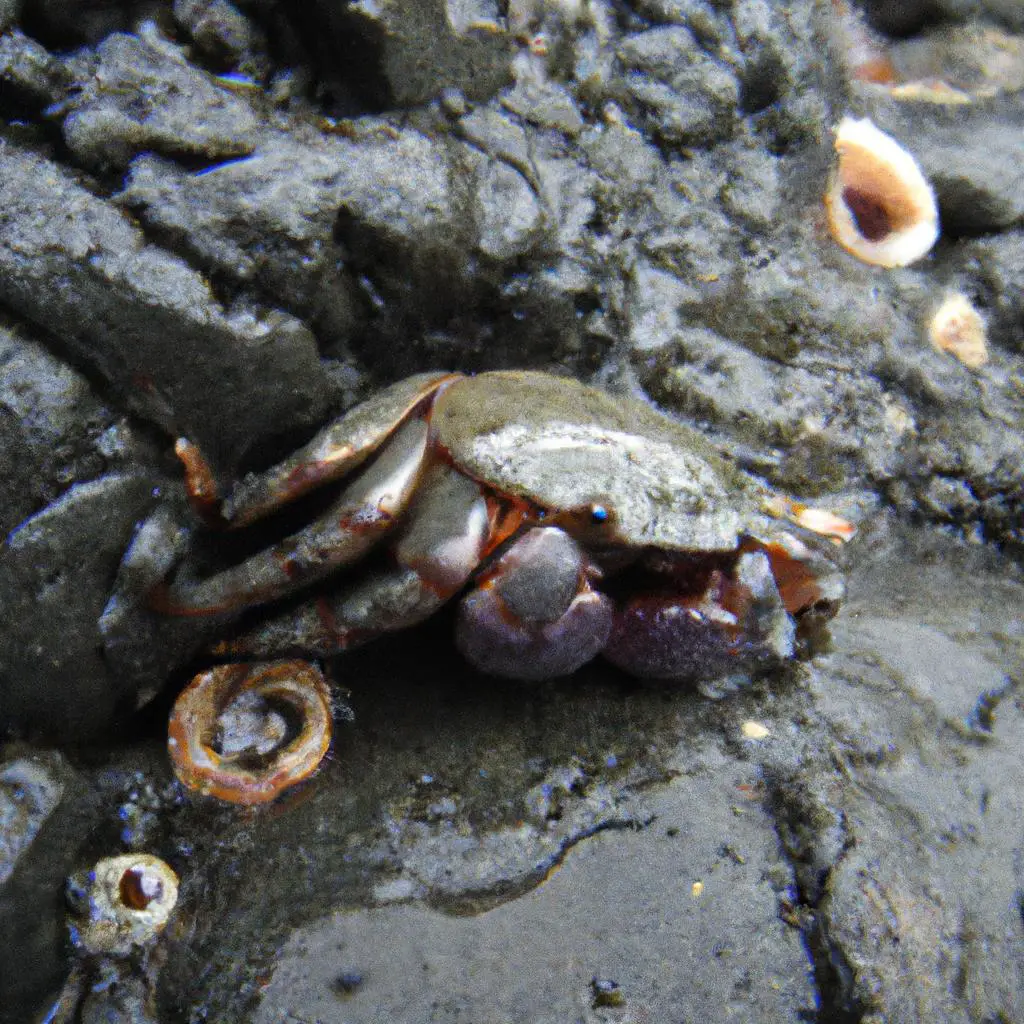
What are Crabs?
Crab Anatomy and Characteristics
Crabs are decapod crustaceans, belonging to the same group as lobsters, shrimp, and crayfish. They have a hard exoskeleton, which provides them with protection and support. Crabs have a distinctive, flattened body with two large front claws (chelae) used for defense, feeding, and manipulating their environment.
Crabs are highly adaptable creatures, with over 6,700 known species found in a variety of aquatic habitats, from freshwater to the deep sea.
Crab Diet and Feeding Behavior
Crabs are omnivorous scavengers, meaning they consume a wide variety of food sources, from plants and algae to other animals. Their diet can include mollusks, small fish, detritus, and even carrion. Crabs use their powerful claws to crush, tear, and manipulate their food before consuming it.
The Interaction Between Crabs and Limpets
Predation
Crabs are known to prey on a variety of marine organisms, including limpets. Their powerful claws are perfectly suited for prying limpets from their rocky homes and crushing their hard shells to access the soft flesh inside.
Ecosystem Dynamics
The predation of limpets by crabs plays a critical role in maintaining the balance and health of marine ecosystems. By controlling limpet populations, crabs help to regulate the distribution of resources in their habitat, ensuring that algae growth is kept in check and preventing the overgrazing of primary producers.
Factors Influencing Crab-Limpet Interactions
Crab Size and Species
Not all crabs are equally interested in limpets as a food source. Larger crabs, such as the green crab (_Carcinus maenas_), are more likely to prey on limpets than smaller crab species. Additionally, some crab species are more specialized in their diets and may not consider limpets to be a significant food source.
Limpet Size and Species
Limpet size and species can also influence the likelihood of predation by crabs. Some limpet species have more robust shells and stronger attachment mechanisms, making them more difficult for crabs to pry from rocks and consume.
Environmental Conditions
The availability and abundance of other food sources, as well as habitat complexity, can influence the interactions between crabs and limpets. In areas with more plentiful food options, crabs may not rely as heavily on limpets for sustenance. Additionally, complex habitats, such as those with many hiding places, can provide limpets with more protection from predation.
Conclusion
So, to answer the question, “Do crabs eat limpets?” – yes, they do. However, this interaction is influenced by a variety of factors, including crab and limpet species, size, and environmental conditions. Here are ten interesting facts about crabs and limpets to wrap up our exploration of these fascinating marine creatures:
1. Crabs are omnivorous scavengers, consuming a wide variety of food sources.
2. Limpets are marine gastropods with a distinctive conical shell.
3. Crabs use their powerful claws to crush and manipulate their food.
4. Limpets use their muscular foot for locomotion and attachment to hard surfaces.
5. Crab predation on limpets plays a critical role in maintaining the balance and health of marine ecosystems.
6. The green crab (_Carcinus maenas_) is more likely to prey on limpets than smaller crab species.
7. Some limpet species have more robust shells and stronger attachment mechanisms, making them more difficult for crabs to prey upon.
8. The availability and abundance of other food sources can influence crab-limpet interactions.
9. Habitat complexity can provide limpets with more protection from predation.
10. Crabs and limpets can be found in a wide range of marine habitats, from the intertidal zone to deep-sea hydrothermal vents.
FAQs
What does the crab eat?
Crabs are omnivores and eat a variety of foods including algae, mollusks, small fish, and other crustaceans.
What do sand crabs eat?
Sand crabs mainly feed on plankton, small crustaceans, and other tiny marine organisms that they filter from the water using their antennae.
Do sand crabs need sand to survive?
Yes, sand crabs need sand to survive as they burrow into the sand to avoid predators and regulate their body temperature. They also feed on small organisms that live within the sand.
What are the small crabs under rocks?
The small crabs under rocks are typically intertidal or subtidal species that seek shelter and protection in crevices and under rocks during low tide or when threatened by predators.
Do shore crabs eat limpets?
Yes, shore crabs are known to eat limpets.
Do sand crabs live in water or sand?
Sand crabs primarily live in the sand, but they also need access to water for survival.


