Explore the Outdoors!

Category: All Articles

Here is an overview of all the articles on the blog.

  • Are Bees Herbivores? (Are Bees Only Herbivores?)

    Are Bees Herbivores? (Are Bees Only Herbivores?)

    Most bees are primary consumers because they mainly eat plant-based food, such as nectar, pollen and sap. However, some bee species, like the vulture bee, will also eat meat and are therefore secondary consumers. Bees are flying insects that are closely related to wasps and ants. They are known for their role in pollination and,…

  • Do Foxes Eat Plants? (Are They Omnivores?)

    Do Foxes Eat Plants? (Are They Omnivores?)

    Most people know foxes as vicious predators, but did you know that they also eat plants? Foxes are among the most common and widespread mammals in cities. They are found on every continent except Antarctica, and their adaptability has allowed them to thrive in a wide range of habitats – from forests and grasslands to…

  • Where Do Squid Fit in the Marine Food Web? (Explained!)

    Where Do Squid Fit in the Marine Food Web? (Explained!)

    Squid are a type of cephalopod, which is a soft-bodied, predatory animal that includes octopuses and cuttlefish. Squid are fast-swimming predators that hunt fish, shrimp, and other small marine animals for food but are themselves prey for larger squids, Albatrosses, sperm whales and sharks. Squid are predators that hunt and kill other animals for food.…

  • Are Bats Omnivores? (Answered With Examples!)

    Are Bats Omnivores? (Answered With Examples!)

    Bats can be primary, secondary, and tertiary consumers since different bat species can eat insects, fruit, nectar, or blood. Bats are flying mammals that are active at night. They are the only mammals capable of true, sustained flight. There are over 1,200 species of bat, which is more than one-fifth of all mammal species in…

  • Are Squirrels Omnivores? (Or Are They Primary Consumers?)

    Are Squirrels Omnivores? (Or Are They Primary Consumers?)

    Squirrels are small rodents, with long tails and include tree squirrels, ground squirrels, chipmunks, flying squirrels, marmots, and prairie dogs1. Squirrels are indigenous to the Americas, Eurasia, and Africa. Squirrels are omnivores (secondary consumers) and not herbivores (primary consumers) as most people think. This is because they eat a small number of insects and other…

  • 70D vs. 210D vs. 420D vs. 600D vs. 1000D Nylon!

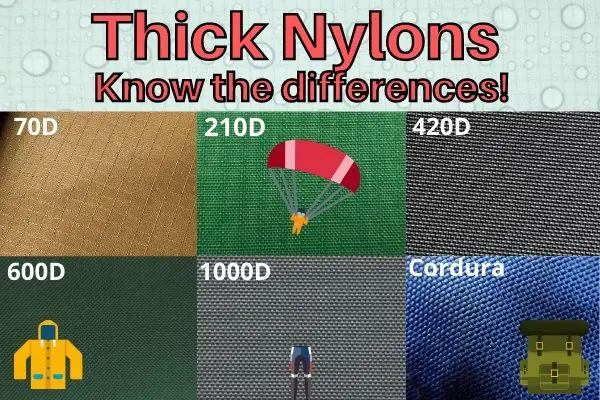
    70D vs. 210D vs. 420D vs. 600D vs. 1000D Nylon!

    I recently wrote about the thinner nylon fabrics (from 10D to 40D) and how these are often used for weight-critical constructions like tents for backpacking or sports jackets. Thicker nylon fabrics like those made from 70D and upwards are sturdy and can be made more waterproof with the right surface treatment. And whereas 70D nylon…

  • is a flamingo a Herbivore, Carnivore or Omnivore?

    is a flamingo a Herbivore, Carnivore or Omnivore?

    Flamingos are filter-feeding sea birds that occur naturally in Africa, Asia, the Americas and Europe. Their diet consists of brine shrimp, blue-green algae, diatoms, and other microscopic organisms. Flamingos are carnivores, or secondary consumers, because they eat animals and plants and their cross-kingdom diet classifies them as omnivores. A notable feature of flamingos is their…

  • Are Crustaceans Insects? (Are Crabs and Lobsters Bugs?)

    Are Crustaceans Insects? (Are Crabs and Lobsters Bugs?)

    Crabs and lobsters belong to a group called crustaceans, often referred to as the “insects of the ocean”1, so it is understandable that they might be confused as true insects. Although crabs and lobsters might look like scorpions or spiders they are actually more related to insects such as moths and beetles. Phylogenetically crustaceans and…

  • Are Bristle Worms Decomposers?

    Are Bristle Worms Decomposers?

    Bristle worms are common invertebrates that live in everything from saltwater aquariums to soil and wood. They get their name from the bristles that cover their bodies and help them to eat, feel, and move. Bristle worms are indeed decomposers that function as detritivores and scavengers. Bristle worms are a diverse group of organisms. While…

  • Is Nylon or Polyester Better for Rain Gear? (Explained!)

    Is Nylon or Polyester Better for Rain Gear? (Explained!)

    Modern rain jackets and rain pants can be made from several different materials, but most of these are derived from nylon or polyester to some extent. Both nylon and polyester are good choices when it comes to rain gear, but there are some crucial differences that you should know before buying your new jacket or…